VCs I’ll be avoiding

Vcspam

I've been getting weekly emails from YoungStartup.com. The funny thing is, they're coming through on an account I only use for DNS registration purposes, and I certainly didn't sign up for them. I normally shrug off this kind of thing, but then I actually looked at the details of this one.

$175 to get in the door for entrepreneurs?! If your idea's any good and you have a little bit of hustle, you'll be able to get a meeting with any VC who might be interested. If neither of those are true, then VC meetings won't help you anyway. Whilst not nearly as bad as the ridiculous fees for presenting to some angel forums, I don't believe this is a sensible use of your precious startup funds and it definitely doesn't leave me with a good impression of the VCs involved.

Social network data and research

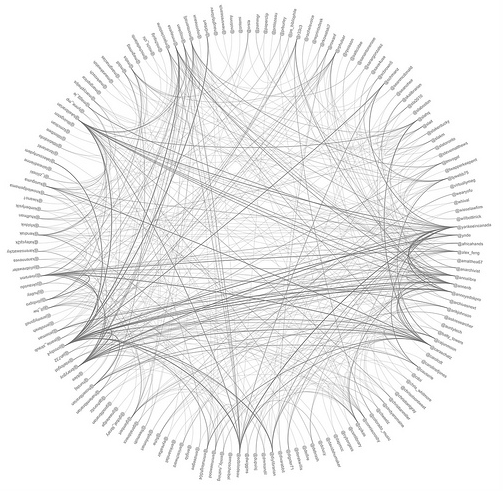
Networkgraph
Image by Yankee in Canada

One of my favorite parts of my own Facebook research has been discovering some of the existing work in this area I didn't know about. Here's some of the most interesting papers:

Inference of Profile Elements of Individuals Using Publicly Available Social Web Data

Using Rapleaf's massive data store of publicly-available social network data, Piotr Kozikowski wrote his master's thesis on inferring attributes like gender, location and age from other known information about a person.

http://current.cs.ucsb.edu/facebook/

Contains details on the EuroSys '09 academic data set containing both connections and interactions for
Facebook.

Real-world separation effects in an online social network

A paper on how geography influences social networks,
using 30,000 users public friendship data from a German social network.

http://randomwalker.info/social-networks/Notes_on_data_acquisition.html

Arvind's got a few notes about the LiveJournal, Twitter and Flickr
data they're using. It sounds like Mislove has been willing to share
LiveJournal network data with other academics in the past.

http://overstated.net/

Cameron Marlow is the head of Facebook's data mining team, and covers
their internal research on his blog.

Finally, it's in a different area, but one of the scariest datasets I've run across is the Enron collection of 500,000 emails released as part of the investigation. I was a heavy user of this for developing my email services, but I'm still amazed it's out there!

How to run CURL fetches in parallel in PHP

Brightthreads
Photo by Incurable Hippie

PHP is my workhorse language, for a lot of reasons I'll need to blog about soon. One problem I keep running into though is how serial it is, especially when it comes to making CURL calls to access web APIs. FindByEmail is a great example; I'm calling over a dozen different APIs, and I have to wait for each one to finish before I can call the next. It can easily take 20 seconds to run the script, where almost all the time is spent idly waiting for a single API call to complete.

There is a solution for this sort of problem; curl_multi_exec() lets you fire off multiple CURL requests at once. Unfortunately the interface is awful, it feels like I might as well be writing in C, which is unsurprising since it's a thin layer over the underlying C library. Typically I'm going through some inputs and fetching URLs as I go, so to speed up those sort of tasks I wrote a much simpler interface on top of the curl_multi engine. ParallelCurl lets you just specify a URL and a callback function, and handles all the mechanics of running your requests simultaneously.

To give you an idea of the possible speedup, the test script makes 100 calls to Google's search API, takes nearly two minutes without parallelization, and runs in 11 seconds with 20 requests running at once. Of course you need to be careful not to overwhelm your target server!

The code's up on github, and using it is as simple as calling:

$parallelcurl->startRequest('http://example.com', 'on_request_done', array('something'));

What’s wrong with confidence?

Questionsign
Photo by Leo Reynolds

I come from Britain, a country swimming in deprecation, self-doubt and cheerful pessimism, so it's been tough for me to learn the confidence I need to get things done. Often the confidence has to come from a gut instinct before there's any real evidence; as Tom Evslin says, nothing great has ever been accomplished without irrational exuberance!

What makes it hard is that you need confidence to take on seemingly impossible tasks, but most of the time your initial confidence is misplaced, they're actually impossible. That doesn't mean you give up, it just means as you learn more about the facts you have to change your approach or even your goals. I've spent a lot of time figuring out tools I can use to help me decide.

Most of them boil down to actively hunting down evidence. What I love about Customer Development is that you collect meaningful user feedback early and often. Even with only a few users, the Net Promoter Score and other surveys I've run have astonished me, and forced radical rethinks. I'm also a disciple of Bob Sutton's work, he's spent his entire career on a crusade for evidence-based decisions, and I love his phrase "Strong opinions, weakly held". If you don't have any confidence or certainty, you'll never persuade anyone to act or really test your own ideas, but if you drink too much of your own kool-aid, the psychological effect of confirmation bias makes you ignore important evidence against your theory.

So, where am I going with this? This is in the front of my mind because I'm sitting banging my head against the table because of the recent developments in the global warming debate. It's obvious from reading the leaked emails that the IPCC and Anglia University have their share of hubris, but I'm driven crazy by how evidence doesn't even seem to feature in the skeptics' arguments. There's an objective reality; either man-made global warming is occurring or it isn't. This isn't a philosophical or political debate (though the question of the right response is). Either it's happening, or it's not, and we have a whole process for determining physical questions like this, called science. It's flawed and uncertain, and the ClimateGate scientists were perverting the process by trying to keep critics away from their data, but it's built on a base of evidence. If you want to dispute the conclusions, you need to dispute that evidence, otherwise it's all just about who shouts the loudest.

Since I'm old enough to remember the coming Ice Age I've got a natural inclination towards skepticism, so I've spent some time going back to the basic papers underlying the consensus. Nobody I'm aware of is disputing the observed rise in CO2 levels, now the highest in 2 million years, and up about 30% in a century. I then dug out a paper that tries to quantify how much heat CO2 and other components in the atmosphere trap. It shows that CO2 is responsible for retaining a significant amount of heat, and again I haven't been able to find any evidence that this is in dispute. Volcanic eruptions are a natural experiment demonstrating that changing the atmosphere's composition can change the climate.

Take these conclusions as facts, and you've got significantly rising levels of a gas known to contribute to warming. Even if you throw out everything else related to temperature measurements and climate models, it's hard to escape concluding that there's a significant possibility that we're affecting the climate. There's legitimate arguments around exactly what will happen and what we should do, but if you're going to assert that global warming is a myth, you have to tackle the evidence directly. I would love to read reasoned arguments based on solid evidence about why I'm wrong, but the few I find tend to evaporate into mirages upon closer inspection.

Confidence is vital for getting things done, but it has to be a spur to test your theories, not a lazy substitute for gathering evidence. I'm very aware of this trap because it's one I keep falling into! I look back at the last two years of building Mailana, and I've lost months chasing lost causes because I didn't see what was right in front of my nose. The skeptics' attacks on AGW remind me so much of those wild goose chases, driven by a firm belief with no foundation. Please, throw evidence at me, but I'm tired of confident assertions with nothing to back them up.

What's wrong with confidence? It turns into a vice when it stops you wrestling with reality.

Micronations

Sealand

Photo by Misterbisson

I've long been fascinated by micronations. It's the geek obsession with taking fundamental building blocks and trying to reinvent them. Following their histories also reminds me how disastrous applying that engineering instinct to social problems can be!

The first of the modern micronations was Sealand, and it's still up and running. Started by a 60's pirate radio broadcaster on a WWII sea fort, it's gone through everything from firearms arrests to kidnapping and helicopter assaults. It even has a government in exile!

The Republic of Indian Stream was an accidental state on the US/Canadian border in the 1800's. An ambiguous border treaty led first to both countries trying to tax the inhabitants of the 300 square mile area, and in protest they declared their independence. The situation lingered on until the inhabitants invaded Canada to free one of their neighbors imprisoned over a hardware store debt. At that point the ambassadors decided an international incident over money owed to a shopkeeper was too embarrassing and negotiated a border agreement ending the republic's short life.

The Territory of Poyais never actually existed, but Gregor MacGregor still managed to raise hundreds of thousands of pounds in the 1820's to settle it. The unlucky colonists who made it to the supposed tropical paradise found themselves stranded in hostile jungle. One committed suicide, the rest were eventually rescued by a chance encounter with a Honduran ship after their original vessel was swept away in a storm. When the survivors made it back to London and spread news of the scam, MacGregor fled to Paris to try it all over again!

Probably the only place out of these I'd actually want to live isn't a real micronation since it doesn't claim to be its own country, but Spiral Island deserves a mention. It's a floating island built on a raft made of 250,000 recycled plastic bottles, complete with a two storey house, beaches and even palm trees. Unfortunately the first version succumbed to a hurricane, but Richie Sowa, the artist behind it, rebuilt it with even more amenities.

WebFinger in PHP

Webfinger
Photo by Arenamontanus

I've spent a lot of time writing code to connect up user's contacts across different services, so I've had high hopes of WebFinger, the universal API to connect public profiles with email addresses. To be honest though I worried it might just be a geeky pipe dream that never gained widespread support from ISPs. I'm extremely happy to be proved wrong by Google's release of an implementation for all their public profiles.

To celebrate, I've added some PHP code to implement the protocol within FindByEmail, my attempt to combine all the email APIs into one package. The WebFinger code is actually fairly self-contained, so it should be easy to rip out and use in isolation. It is very early days for the protocol, and as far as I know only Google has implemented it, so I'll be keeping it updated as I learn more. To see if it works on your email address, give it a try for
yourself here
.

Interestingly enough Google already had their Social Graph API that exposed a lot of the same information about public profiles, but it never really achieved widespread adoption. I'm really hoping WebFinger will become a much more widespread standard.

The lizardmen tunnels beneath LA, and other strange maps

Americasteak

Maybe it was growing up glued to The Reader's Digest Book of Strange Stories and Amazing Facts, but I've always had a weakness for the odd and neglected corners of history. If you suffer a similar affliction, you'll be as hooked as I am to the Strange Maps blog. Exploring the dark side of geography from the lost Lizardman tunnels of Los Angeles to an atlas of time itself, it manages to take in an asphalt map of Maine and a drive-thru scale replica of the solar system along the way.

Ringroadrose
 

The Beer Belly of America and other geographic mischief

Beerbelly

I just discovered the wonderful floatingsheep.org, home to a whole bunch of new perspectives on the US and the world. My personal favorite is the Beer Belly of America, a map highlighting parts of the country with more bars than grocery stores! I love visiting Wisconsin and can well believe that they have a bar for every 1,700 people. A neon sign in Hayward advertising "Liquor & Live Bait" particularly sticks in my mind.

Nearly as much fun is their comparison of pizza, guns and strip clubs:

Pizzamap 

Also highly recommended are Baptists, Bibliophiles and Bibles, User-generated Swine Flu and Allah vs Buddah vs Jesus. I'm so pleased to discover someone else as obsessed with these sort of random but fascinating views of the world. Great work by Matthew, Mark and Taylor!

Your chance to hire an amazing QA engineer in Austin

I was sad to hear that Apple are letting go some remote workers in their video software division, especially because that means Doyle Rockwell is leaving. He's been a driving force behind Apple's professional video products like Motion and Final Cut Pro for the last 8 years, but since he recently moved from LA to Austin to be closer to family, he's fallen prey to some job cuts focused on off-site employees.

I know the whole of my old team is going to miss him, he's truly one of the rare great testers that Joel so recently described. He's deeply interested in software, very good at both automating tests and spending days tracking awkward bugs down manually when he needed to. He actually really cared about our customers, which both made him an awesome resource in design discussions, and led him to spend many long hours of his own time building helper tools and tutorials to work around issues in the software. You can check out some of them at motionsmarts.com, as you can see he did all of this anonymously. Anyone who's asked a motion graphics question on Apple's official forum is likely to have got a reply from 'specialcase' too. This exchange from December is typical Doyle, with the user responding "Nothing short of sweet. Thanks specialcase, worked perfectly!" None of this was an official part of his job, he went above and beyond to help Apple's users.

Anyway, he's a terrible self-promoter and has a young family to support, so I wanted to thank him for all the help he's given my products over the years with a heads-up to the tech world that they have a wonderful chance to hire a great new employee. His email address is specialcase at mac.com, please drop him a line if you're interested in hearing more about how he could help you, you won't regret it!

The Facebook Whisperer

Horsewhisperer
Photo by Gerald Davison

That's Andrew Hyde's new nickname for me after reading the ReadWriteWeb article! More seriously, it's been amazing to see the reaction and support I've received from everyone. I'm so excited by the possibilities and insights we can gain by this sort of analysis, and I'm hopeful that we'll see a lot more of it coming. I'm still trying to catch up with my email and the blog comments, so my apologies for the slowness in responding, but I did want to mention a few things here about the maps.

Mercator

I want to make sure Manfred gets credit for the awesome Mercator Flash component he open-sourced, I used it as the basis for the interactive maps. I've blogged about it before, but he deserves a lot of kudos for making a great visualization building block. If you're interested in the interactive heat maps I use on fanpageanalytics.com, I've also made those available as open-source.

Twilight and Utah

I'm feeling very old and out of touch! I was unaware that Stephenie Meyer is from Utah, which explains the Mormon connection. Thanks to everyone who helped educate me, even Edward Cullen himself.

Alexandria, Georgia and ambiguous place names

Some of you spotted some mis-classification of people's locations, with people from Alexandria, Egypt showing up in Alexandria, LA, and the ex-Soviet Georgians showing up in Dixie. That looks like a bug in the location sorting I'm using, I'll investigate and get a fix in for the next version.

Data release

I was hoping to get the first release of the academic data set out today, but Facebook have asked for a little more time to check the privacy implications. I'm very keen to avoid inadvertently helping spammers and scammers, so I'm working with them to make sure the data set is useful for network research but not malicious purposes. I'll keep you up to date on how that goes.