Five short links

arena5

Photo by <rs> snaps

Crossing the great UX/Agile divide – Methodologies are driven by human needs, and I know from personal experience that agile development takes power from designers and gives it to engineers. That doesn’t mean it’s wrong, but admitting there’s a power dynamic there makes it at least possible to talk about it candidly. “Although many software developers today enjoy the high salaries and excellent working conditions associated with white-collar work, it may not stay that way and UX design could be a contributing factor.

Eigenmorality – A philosophical take on how PageRank-like algorithms could be used to tackle ethical dilemmas, featuring Eigenmoses and Eigenjesus.

The elephant was a Trojan horse – I almost always use Hadoop as a simple distributed job system, and rarely need MapReduce. I think this eulogy for the original approach captures a lot of why MapReduce was so important as an agent of change, even if it ended up not being used as much as you’d expect.

Neural networks, manifolds, and topology – There are a lot of important insights here. One is the Manifold Hypothesis, which essentially says there are simpler underlying structures buried beneath the noise and chaos of natural data. Without this, machine learning would be impossible, since you’d never be able to generalize from a set of examples to cope with novel inputs, there would be no pattern to find. Another is that visual representations of the problems we’re tackling can help make sense of what’s actually happening under the hood.

The polygon construction kit – Turns 3D models into instructions for building them in the real world. It’s early days still, but I want this!

Pete Warden, US Citizen!

I’m very proud and excited to be taking my oath of allegiance this morning, the final step to becoming a US citizen after thirteen years of calling this country my home. To mark the occasion, my girlfriend Joanne wanted to interview me to answer some pressing questions about exactly why I still can’t pronounce “Water” correctly!

Why is everyone so excited about deep learning?

nobrain

Photo by Narisa

Yesterday a friend emailed, asking “What’s going on with deep learning? I keep hearing about more and more companies offering it, is it something real or just a fad?“. A couple of years ago I was very skeptical of the hype that had emerged around the whole approach, but then I tried it, and was impressed by the results I got. I still try to emphasize that they’re not magic, but here’s why I think they’re worth getting excited about.

They work really, really well

Neural networks have been the technology-of-the-future since the 1950’s, with massive theoretical potential but lacklustre results in practice. The big turning point in public perception came when a deep learning approach won the equivalent of the World Cup for computer vision in 2012. Just look at the results table, the Super Vision team, Alex Krizhevsky, Ilya Sutskever, and Geoffrey Hinton, absolutely trounced their closest competitors. It wasn’t a fluke, here’s a good overview of a whole bunch of other tasks where the approach is either beating more traditional approaches or providing comparable results. I can back this up with my own experience, and they’ve consistently won highly-competitive Kaggle competitions too.

They’re general-purpose

I’m focused on computer vision, but deep neural networks have already become the dominant approach in speech recognition, and they’re showing a lot of promise for making sense of text too. There’s no other technique that applies to so many different areas, and that means that any improvements in one field have a good chance of applying to other problems too. People who learn how to work with deep neural nets can keep re-using that skill across a lot of different domains, so it’s starting to look like a valuable foundational skill for practical coders rather than a niche one for specialized academics. From a research perspective it makes the approach worth investing in too, because they show a lot of promise for tackling a wide range of topics.

They’re higher-level

With neural networks you’re not telling a computer what to do, you’re telling it what problem to solve. I try to describe what this means in practice in my post about becoming a computer trainer, but the key point is that the development process is a lot more efficient once you hand over implementation decisions to the machine. Instead of a human with a notebook trying to decide whether to look for corners or edges to help spot objects in images, the algorithm looks at a massive number of examples and decides for itself which features are going to be useful. This is the kind of radical change that artificial intelligence has been promising for decades, but has seldom managed to deliver until now.

There’s lots of room for improvement

Even though the Krizhevsky approach won the 2012 Imagenet competition, nobody can claim to fully understand why it works so well, which design decisions and parameters are most important. It’s a fantastic trial-and-error solution that works in practice, but we’re a long way from understanding how it works in theory. That means that we can expect to see speed and result improvements as researchers gain a better understanding of why it’s effective, and how it can be optimized. As one of my friends put it, a whole generation of graduate students are being sacrificed to this effort, but they’re doing it because the potential payoff is so big.

I don’t want you to just jump on the bandwagon, but deep learning is a genuine advance, and people are right to be excited about it. I don’t doubt that we’re going to see plenty of other approaches trying to improve on its results, it’s not going to be the last word in machine learning, but it has been a big leap forward for the field, and promises a lot more in years to come.

Deep learning on the Raspberry Pi!

raspberrypi

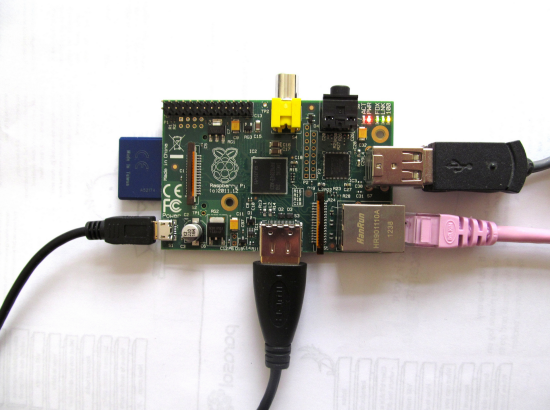
Photo by Clive Darra

I’m very pleased to announce that I’ve managed to port the Deep Belief image recognition SDK to the Raspberry Pi! I’m excited about this because it shows that even tiny, cheap devices are capable of performing sophisticated computer vision tasks. I’ve talked a lot about how object detection is going to be commoditized and ubiquitous, but this is a tangible example of what I mean, and I’ve already had folks digging into some interesting applications; detecting endangered wildlife, traffic analysis, satellites, even intelligent toys.

I can process a frame in around three seconds, largely thanks to heavy use of the embedded GPU for heavy lifting on the math side. I had to spend quite a lot of time writing custom assembler programs for the Pi’s 12 parallel ‘QPU’ processors, but I’m grateful I could get access at that low a level. Broadcom only released the technical specs for their graphics chip in the last few months, and it’s taken a community effort to turn that into a usable set of examples and compilers. I ended up heavily patching one of the available assemblers to support more instructions, and created a set of helper macros for programming the DMA controller, so I’ve released those all as open source. I wish more manufacturers would follow Broadcom’s lead and give us access to their GPUs at the assembler level, there’s a lot of power in those chips but it’s so hard to tune algorithms to make use of them without being able to see how they work.

Download the library, give it a try, and let me know about projects you use it on. I’m looking forward to hearing about what you come up with!

How I teach computers to think

cattamer

Photo by Kit

Yesterday I was suddenly struck by a thought – I used to be a coder, now I teach computers to write their own programs. With the deep belief systems I’m using for computer vision, I spend most of my time creating an environment that allows the machines to decide how they want to solve problems, rather than dictating the solution myself. I’m starting to feel a lot more like a teacher than a programmer, so here’s what it’s like to teach a classroom of graphics cards.

Curriculum

I have to spend a lot of time figuring out how to collect a large training set of images, which have to represent the kind of pictures that the algorithm will be likely to encounter. That means you can’t just re-use photos from cell phones if you’re targeting a robotics application. The lighting, viewing angles, and even the ‘fisheye’ geometry of the lens all have to be consistent with what the algorithm will encounter in the real world or you’ll end up with poor results. I also have to make sure the backgrounds of the images are as random as possible, because if the objects I’m looking for always occur in a similar setting in the training, I’ll end up detecting that rather than the thing I actually care about.

Another crucial step is deciding what the actual categories I’m going to recognize are. They have to be the kind of thing that’s quite different between images, so separating cats from dogs is more likely to work than distinguishing American from British short-hair cat breeds. There are often edge cases too, so to get consistent categorization I’ll spend some time figuring out rules. If I’m looking for hipsters with mustaches, how much stubble does somebody need on their upper lip before they count? What if they have a mustache as part of a beard?

Once I’ve done all that, I have to label at least a thousand images for each category, with often up to a million images in total. This means designing a system to capture likely images from the web or other sources, with a UI that lets me view them rapidly and apply labels to any that fall into a category I care about. I always start by categorizing the first ten thousand or so images myself so I can get a feel for how well the categorization rules work, and what the source images are like overall. Once I’m happy the labeling process works, I’ll get help from the rest of our team, and then eventually bring in Mechanical Turks to speed up the process.

Instruction

One advantage I have over my conventional teacher friends is that I get to design my own students! This is one of the least-understood parts of the deep learning process though, with most vision solutions sticking pretty close to the setup described in the original Krizhevsky paper. There are several basic components that I have to arrange in a pipeline, repeating some of them several times with various somewhat-arbitrary transformations in between. There are a lot of obscure choices to make about ordering and other parameters, and you won’t know if something’s an improvement until after you’ve done a full training run, which can easily take weeks. This means that, as one of my friends put it, we have an entire generation of graduate students trying to find improvements by trying random combinations in parallel. It’s a particularly painful emulation of a genetic algorithm since it’s powered by consuming a chunk of people’s careers, but until we have more theory behind deep learning, the only way to make progress is by using architectures that have been found to work in the past.

The training process itself involves repeatedly looping through all of the labeled images, and rewarding or punishing the neural connections in your network depending on how correctly they respond to each photo. This process is similar to natural learning, as more examples are seen the system starts to understand more about the patterns they have in common and the success rate increases. In practice deep neural networks are extremely fussy learners though, and I spend most of my time trying to understand why they’re bone-headedly not improving when they should be. There can be all sorts of problems; poorly chosen categories, bad source images, incorrectly classified objects, a network layout that doesn’t work, or bugs in the underlying code. I can’t ask the network why it’s not learning, we just don’t have good debugging tools, so I’ll usually end up simplifying the system to eliminate possible causes and try solutions more quickly than I could with a full run.

Training can take a long time for problems like recognizing the 1,000 Imagenet categories, on the order of a couple of weeks. At any point the process can spiral out of control or hit a bug, so I have to check the output logs several times a day to see how they’re doing. My girlfriend has became resigned to me tending ‘the brain’ in the corner of our living room in breaks between evening TV. Even if nothing’s gone dramatically wrong, several of the parameters need to be changed as the training process progresses to keep the learning rate up, and knowing when to make those changes is much more of an art than a science.

Finals

Once I’ve got a model fully trained, I have to figure out how well it works in practice. You might think it would be easy to evaluate a computer, they don’t have all the human problems of performance anxiety or distraction, but this part can actually be quite tough. As part of the training process I’m continually running numerical tests on how many right and wrong answers the system is giving, but, like standardized tests for kids, these only tell part of the story. One of the big advantages I’ve found with deep learning systems is that they make more understandable mistakes than other approaches. For example, users are a lot more forgiving if a picture of a cat is mis-labeled as a racoon, than if it’s categorized as a coffee cup! That kind of information is lost when we boil down performance into a single number, so I have to dive deeper.

The real test is building the model into an application and getting it in front of users. Often I’ll end up tweaking the results of the algorithm based on how I observe people reacting to it, for example suppressing the nematode label because it’s the default when the image is completely black. I’ll often spot more involved problems that require changes at the training set level, which will require another cycle through the whole process once they’re important enough to tackle.

As you can see being a computer trainer is a strange job, but as we get better at building systems that can learn, I bet it’s going to be increasingly common. The future may well belong to humble humans who work well with intelligent machines.


Five short links

ape5roverred

Picture by H. Michael Karshis

The spread of American slavery – A compelling use of animated maps to get across the fact that slavery was spreading and dominating the places it existed, right up until the Civil War. A map that matters, because it punctures the idea that slavery would have withered away naturally without intervention from the North.

Snapchat and privacy and security consent orders – On the surface FTC consent orders look pretty toothless, so why do companies worry about them so much? This article does a good job of what they mean in practice, and it looks like they operate as jury-rigged regulations tailored for individual corporations, giving the FTC wide powers of oversight and investigation. The goals are often noble, but the lack of consistency and transparency leaves me worried the system is ineffective. If these regulations only apply to companies who’ve been caught doing something shady, then it just encourages others to avoid publicity around similar practices to stay exempt from the rules.

Maze Tree – I have no idea what the math behind this is, but boy is it pretty!

A suicide bomber’s guide to online privacy – The ever-provocative Peter Watts pushes back on David Brin’s idea of a transparent society by reaching into his biology training. He makes a convincing case that the very idea that someone is watching you is enough to provoke fear, in a way that’s buried deep in our animal nature. “Many critics claim that blanket surveillance amounts to treating everyone like a criminal, but I wonder if it goes deeper than that. I think maybe it makes us feel like prey. ”

Data-driven dreams – An impassioned rant against the gate-keeping that surrounds corporate data in general, and the lack of access to Twitter data for most research scientists in particular. Like Craigslist, Twitter messages feel like they should be a common resource since they’re public and we created them, but that’s not how it works.

Everything is a sensor for everything else

sinkhole

Photo by Paretz Partensky

Everything is a sensor for everything else

I love this quote from David Weinberger because it captures an important change that’s happening right now. Information about the real world used to be scarce and hard to gather, and you were lucky if you had one way to measure a fact. Increasingly we have a lot of different instruments we can use to look at the same aspect of reality, and that’s going to radically change our future.

As an example, consider the humble pothole. Before computerization, someone in a truck would drive around town every year or so, see which roads were in bad repair, and write down a list on a clipboard. If a citizen phoned up city hall to complain, that would be added to another list, and someone who knew the road network would then sort through all the lists and decide which places to send crews out to.

The first wave of computerization moved those clipboard lists into spreadsheets and GIS systems on an office desktop, but didn’t change the process very much. We’re in the middle of the second wave right now, where instead of phone calls our cell phones can automatically report pot holes just from accelerometer data.

Using sensors to passively spot holes takes humans out of the loop, and means we can gather tens or hundreds of times the number of reports that we would if a person had to take time out of their day to submit one manually. This is only the beginning of the tidal wave of data though.

Think about all the different ways we’ll be able to detect potholes over the next few years. Police and other public workers are increasingly wearing cameras, patrol cars have had dashboard cameras for a while, and computer vision’s at the point where analyzing the video to estimate road repair needs isn’t outlandishly hard. We’re going to see a lot more satellites taking photos too, and as those get more frequent and detailed, those will be great sources to track road conditions over time.

Beyond imagery, connected cars are going to be transmitting a lot of data, and every suspension jolt can be used as a signal that the driver might have hit a hole, and even small swerves to avoid a hazard could be a sign of a potential problem. Cars are also increasingly gaining sensors like LIDAR, radar and sonar. Their job is to spot obstacles in the road, but as a by-product you could also use the data they’re gathering to spot pot holes and even early cracks in the road surface.

There will be a even more potential sources of data as networked sensors get cheap enough to throw into all sorts of objects. If bridges get load sensors to spot structural damage, the same data stream can be analyzed to see when vehicles are bouncing over holes. Drones will be packed with all sorts of instruments, some of which will end up scanning the road. As the costs of computing, sensing, and communicating fall, the world will be packed with networked sensors, some of which will be able to spot potholes even if their designers never planned for that.

With all of this information, you might have thousands or even millions of readings from a lot of different sources about a single hole in the road. That’s serious overkill for the original use case of just sending out maintenance crews to fix them! This abundance of data makes a lot of other applications possible though. Insurance companies will probably end up getting hold of connected-car data, even if it’s just in aggregate, and can use it to help improve their estimates of car damage likelihood by neighborhood. Data on potholes from public satellite imagery can be used by civic watchdogs to keep an eye on how well the authorities are doing on road repairs. Map software can pick cycling routes that will offer the smoothest ride, based on estimates on the state of the road surface.

These are all still applications focused on potholes though. Having this overwhelming amount of sensor information means that the same data set can be mined to understand apparently unrelated insights. How many potholes there are will be influenced by a lot of things; how much rain there was recently, how many vehicles drove on the road, how heavy they were, how fast they were going, and I’d bet there are other significant factors like earth movements, and nearby construction. Once you have a reliable survey of potholes with broad coverage and frequent updates, you can begin to pull those correlations out. The sheer quantity of measurements from many independent sources means that the noise level shrinks and smaller effects can be spotted. Maybe you can spot an upswing in the chemical industry by seeing that there are a lot more potholes near their factories, because the haulage trucks are more heavily laden? How about getting an early warning of a landslide by seeing an increase in road cracks, thanks to initial shifts in the soil below?

These are just examples I picked off the top of my head, but the key point is that as the sample sizes grow large enough, sensors can be used to measure apparently unrelated facts. There are only so many quantities we care about in the real world, but the number of sensor readings keeps growing incredibly rapidly, and it’s becoming possible to infer measurements that would once have needed their own dedicated instruments. The curse of ‘big data’ is spurious correlations, so it’s going to be a process of experimentation and innovation to discover which ones are practical and useful, but I’m certain we’re going to uncover some killer applications by substituting alternative sensor information in bulk for the readings you wish you had.

It also means that facts we want to hide, even private ones about ourselves, are going to be increasingly hard to keep secret as the chances to observe them through stray data exhaust grows, but that’s a discussion for a whole new post!

Why fixing the privacy problem needs politics, not engineering

surveillance

Photo by Canales

I just returned from a panel at UC Berkeley’s DataEdge conference on “How surveillants think“. I was the unofficial spokesman for corporate surveillance, since not many startup people are willing to talk about how we’re using the flood of new data that people are broadcasting about themselves. I was happy to stand up there because the only way I can be comfortable working in the field is if I’m able to be open about what I’m doing. Blogging and speaking are my ways of getting a reality check from the rest of the world on the ethics of my work.

One of the most interesting parts was an argument between Vivek Wadhwa and Gilman Louie, former head of In-Q-Tel, the venture capital arm of the US intelligence services. Apologies in advance to both of them for butchering their positions, but I’ll try to do them justice. We all agreed that retaining privacy in the internet age was a massive problem. Vivek said that the amount of data available about us and the technology for extracting meaning from it were advancing so fast that social norms had no hope of catching up. The solution was a system where we all own our data. Gilman countered with a slew of examples from the public sector, talking about approaches like the “Do not call” registry that solved tough privacy problems.

A few years ago I would have agreed with Vivek. As a programmer there’s something intuitively appealing about data ownership. We build our security models around the concepts of permissions, and it’s fun to imagine a database that stores the source of every value it contains, allowing all sorts of provenance-based access. At any point, you could force someone to run a “DELETE FROM corp_data WHERE source=’Pete Warden’;“, and your information would vanish. This is actually how a lot of existing data protection laws work, especially in the EU. The problem is that the approach completely falls over once you move beyond explicitly-entered personal information. Here are a few reasons why.

Data is invisible

The first problem is that there’s no way to tell what data’s been collected on you. Facebook used to have a rule that any information third-parties pulled from their API had to be deleted after 24 hours. I don’t know how many developers obeyed that rule, and neither does anyone else. Another example is Twitter’s streaming API; if somebody deletes a tweet after it’s been broadcast, users of the API are supposed to delete the message from their archives too, but again it’s opaque how often that’s honored. Collections of private, sensitive information are impossible to detect unless they’re exposed publicly. They can even be used as the inputs to all sorts of algorithms, from ad targeting to loan approvals, and we’d still never know. You can’t enforce ownership if you don’t know someone else has your data.

Data is odorless

Do I know that you like dogs from a pet store purchase, or from a photo you posted privately on Facebook, from an online survey you filled out, from a blog post you wrote, from a charitable donation you made, or from a political campaign you gave money to? It’s the same fact, but if you don’t give permission to Facebook or the pet store to sell your information, and you discover another company has it, how do you tell what the chain of ownership was? You could require the provenance-tagging approach, I know intelligence agencies have systems like that to ensure every word of every sentence of a briefing can be traced back to their sources, but it’s both a massive engineering effort, and easy to fake. Just pretend that you have the world’s most awesome dog-loving prediction algorithm from other public data, and say that’s the source. With no practical way to tell where a fact came from, you can’t assert ownership of it.

All data is PII

Gilman talked about how government departments spend a lot of time figuring out how to safely handle personally-identifiable information. One approach to making a data ownership regime more practical is to have it focus on PII, since that feels like a more manageable amount of data. The problem is that deanonymization works on almost any data set that has enough dimensions. You can be identified by your gait, by noise in your camera’s sensor, by accelerometer inconsistencies, by your taste in movies. It turns out we’re all pretty unique! That means that almost any ‘data exhaust’ that might appear innocuous could be used to derive sensitive, personal information. The example I threw out was that Jetpac has the ability to spot unofficial gay bars in repressive places like Tehran, just from the content of public Instagram photos. We try hard to avoid exposing people to harm, and don’t release that sort of information, but anyone who wanted to could do a similar analysis. When the world is instrumented, with gargantuan amounts of sensor data sloshing around, figuring out what could be sensitive is almost impossible, so putting a subset of data under ownership won’t work.

Nobody wants to own their data

The most depressing thing I’ve discovered over the years is that it’s very hard to get people interested in what’s happening to their data behind closed doors. People have been filling out surveys in magazines for decades, building up databases at massive companies like Acxiom long before the internet came along. For a price, anyone can download detailed information on people, including their salary, kids, medical conditions, military service, political beliefs, and charitable donations. The person in the street just doesn’t care. As long as it’s not causing them problems, nobody’s bothered. It matters when it affects credit scores or other outcomes, but as long as it’s just changing the mix of junk mail they receive, there’s no desire to take any action. Physical and intellectual property laws work because they build on an existing intuitive feeling of ownership. If nobody cares about ownership of their data, we’ll never be pass or enforce legislation around the concept.

Privacy needs politics

I’ve been picking on Vivek’s data ownership phrase as an example, and he didn’t have a chance to outline what he truly meant by that, but in my experience every solution that relies on constraining data inputs has similar problems. We’re instrumenting our lives, we’re making the information from our sensors public, and organizations are going to exploit that data. The only way forward I see is to focus on cases where the outcomes from that data analysis are offensive. It’s what people care about after all, the abuses, the actual harms that occur because of things like redlining. The good news is that we have a whole set of social systems set up to digest new problems, come up with rules, and ensure people follow them. Vivek made the point that social mores are lagging far behind the technology, which is true. Legislators, lawyers, and journalists, the people who drive those social systems don’t understand the new world of data we’re building as technologists. I think where we differ is that I believe it’s possible to get those folks up to speed before it’s too late. It will be messy, painful, and always incomplete process, but I see signs of it already.

Before anything else can happen, we need journalists to explain what’s going on to the general public. One of the most promising developments I’ve seen is the idea of reporters covering algorithms as a beat, just like they cover crime or finance. As black boxes make an increasing number of decisions about our lives, we need watchdogs who can keep an eye on them. Despite their internal complexity, you can still apply traditional investigative skills to the results. I was pleased to see a similar idea pop up in the recent Whitehouse report on Big Data too – “The increasing use of algorithms to make eligibility decisions must be carefully monitored for potential discriminatory outcomes for disadvantaged groups, even absent discriminatory intent.”. Once we’ve spotted things going wrong, then we need well-crafted legislation to stop the abuse, and like Gilman I’d point to “Do not call” as a great example of how that can work.

The engineering community is generally very reluctant to get involved in traditional politics, which is why technical solutions like data ownership are so appealing to us. The trouble is we’re now at the point where the mainstream world knows that the new world of data is a big threat to privacy, and they’re going to put laws in place whether we’re involved or not. If we’re not part of the process, and if we haven’t educated the participants to a reasonable level, they’re going to be ineffective and even counter-productive laws. I’m trying to do what I can by writing and talking about the realities of our new world, and through volunteering with political campaigns. I don’t have all the answers, but I truly believe the best way for us to tackle this is through the boring footwork of civil society.

Five short links

fivedollarshirt

Photo by Faraz

GrubHub’s Phasmid Websites – The latest evolution of websites that appear to be official, but are actually set up by a third-party to benefit from traffic. As the costs of hosting a site keeps dropping, there will be more and more of these competing for attention. Long-term this feels like just as much of a threat to the web model as mobile app stores, since we have to trust Google to win the arms race against fakers without down-ranking obscure-but-genuine sites.

Dizzying but invisible depth – In my lifetime we’ve gone from machines that I had a chance of understanding completely given decades to study them, to ones that no one person could ever hope to create a complete mental model of. Maybe this is the point at which CS truly needs to become a science, since we’re building increasingly blacker boxes we can only hope to comprehend by experimenting on?

Machine-learning on a board – Large neural networks are going to be showing up in your domain soon, I promise, so I’m keeping an eye out for interesting hardware approaches like this that may help accelerate them on otherwise-modest systems.

San Francisco Survival Guide – Short but packed with the essentials you need to know. A good reminder of some things it’s easy for me to get blasé about too, both good and bad – “The inequality will shock you and continue to shock you.

Pointer magic for efficient dynamic value representations – Bit-twiddling fun.

Hiking “Round the Mountain”, Tongariro National Park

P1010688

A few weeks ago, I was lucky enough to head to New Zealand for KiwiFoo and a few other work meetings. I only knew I’d be going about a month ahead of time, but I wanted to fit in a few days backpacking after the conference. After some research, I settled on the Round the Mountain trail, because it was between my work destinations of Auckland and Wellington on the North Island, but promised a secluded experience in the wilderness. I ended up having some wonderful moments on the hike, but it didn’t all go to plan. Since I enjoy being a cautionary example to others, here’s the story of how it went!

Preparation

Planning the route was comparatively easy, thanks to the internet. The official website was surprisingly helpful, but I also found quite a few professional guide pages, and some useful personal trip reports. Looking back, I got quite an accurate idea of what I’d be tackling from the research, especially the personal posts that covered the areas that had proved difficult. The ‘ratings’ on the professional sites weren’t helpful, ranging from easy to moderate to hard, and from a distance it was hard to estimate the time it would take without knowing the expected speed and experience they based it on. I ended up being overly optimistic hoping for a three-day trip, but left myself enough room in my schedule to let it stretch to five if I needed to. The one thing that I couldn’t find anywhere, even in Auckland book stores and outdoor shops, were paper maps of the area. I was set up with a GPS, but I didn’t feel ready until I had a traditional backup. From chatting to folks at the stores, the Topo50 physical maps are no longer being stocked, since anyone can download them and print them for free. This doesn’t give you a large water and tear-resistant map though, and it also isn’t easy to manage while you’re traveling, so I was happy when I found a good map at a gas station closer to the trail head.

I had knee surgery last year, so even though I’d been cleared to keep hiking I wanted to be cautious. I’d been biking a fair amount, and getting in occasional hikes, but it had been over a year since my last overnight trip, and several years since I’d done serious multi-day backpacking. I spent several weeks doing two short hikes up a steep hill every day with a backpack I’d weighted down as much as I could, in the hope of building up my stamina and fitness enough to keep up a strong pace, and stay safe if the footing got tricky. I went from woefully out of hiking condition, to reasonable-but-not-great. More variety in my training hikes and at least one mountainous overnighter would have left me in a better place, but I’m glad I at least was in decent shape when I faced the trail.

Monday

After driving down from Auckland and arriving late, I stayed at the Chateau Tongariro in Whakapapa Village. This was very close to the trailhead, but with breakfast, picking up some last-minute supplies, doing the final packing of my backpack, and checking in at the visitor center to pick up the hut passes I needed, along with any advice they had, I didn’t get out on the trail until noon. I knew there was bad weather due in a couple of days, but I was committed to tackling the hike as best I could, and figured I’d see how things looked as time went on. I felt well-prepared with equipment and experience, I wasn’t going to keep going if conditions left me feeling at all unsafe, but I also knew I was doing it solo which I normally wouldn’t recommend, especially in an unfamiliar area.

P1010652

The trail surface was beautifully-maintained on that section of the walk. Gray gravel, clearly-defined edges, and lots of markers left me feeling more confident. There were some steep sections, but even with my backpack on I managed the 8.5 mile walk to Waihohonu Hut in four hours, when the official estimate was five and a half. My hope had been to continue another 7.5 miles to Rangipo Hut, but with my late start that would have involved some trekking through the dark, so I decided to make camp. I had a bivouac tent, and set up in the campground below the main hut. I did pop in to say hi to the folks gathered there and check in with the warden, but after a long conference I wasn’t feel too social. I sensed that wasn’t culturally appropriate and that I was expected to make more of an effort to bond with the group, but I was after some time alone in the wilderness!

Tuesday

I knew this would be a long day, and after my relative lack of progress on Monday I needed to make an early start and would have a late finish. My goal was Mangahuehu Hut 12.5 miles further on, past Rangipo Hut. After the pace I’d kept up for the first section, I was hopeful this was reasonable. It was southern-hemisphere fall, so I only had 11 hours of daylight from my departure at 7am, but that seemed like it should be plenty. I soon discovered the trail was a lot tougher than I expected though. I’d left the section that was shared with the Tongariro ‘Great Walk’, and the route and condition of the trail became much worse.

P1010666

There were still frequent marker posts, but often there was no worked trail surface, just stream beds and fields of pumice. The trail wound up and down across a seemingly-endless series of valleys and ridges, and by lunchtime it was clear I was moving more slowly than I’d hoped, even falling behind the official estimates. On top of all that, this was waiting for me:

P1010677

I had prepared for the practical problems of being a solo hiker, but I hadn’t thought too much about the psychological ones. I knew the lahar valley was coming up, and had been looking forward to some interesting terrain and a tiny slice of danger when I researched it from the safety of home. When I got there, it was unexpectedly hard. The river always seemed to make a loud roaring noise, the trail was often hard to see, four hundred metres felt like a long way, the route was hard to follow, and it was technically very challenging. I got very focused on getting through as fast as I could, and wasn’t thinking clearly. As I was climbing out of the other side of the valley along the side of a cliff, I found the rock-ledge I was on narrowing. Rather than stopping, looking around, and thinking, I shucked off my backpack, left it on the shelf and inched along the ledge to the next section of trail, leaning into the cliff-face and trying to keep my balance. I heard a crash, and saw my backpack had fallen off the ledge. Thankfully it was only a twenty-foot drop, but it could easily have been me. Sobered, I finally took a good look at where I was, and realized that the current trail was down below me, near where my backpack had fallen, and I’d been following an old one that had been washed away. I carefully made my way down, retrieved my backpack (thankfully nothing was damaged), and made my way uneventfully out of the lahar zone.

P1010676

I left the valley chastened. I like to think I’m conservative about safety, but by not paying attention to the trail, and then forging ahead instead of backtracking when it became dangerous, I’d taken a very dumb risk. I was lucky to get away unharmed. Looking back, I could see I was so focused on the distant lahar danger that I’d lost perspective and freaked out. I don’t think I’d have made the same mistake with other people around, just the process of talking about what we were doing would have grounded me a lot more. The experience made me realize how insidious panic can be. I didn’t realize how badly my judgment had been skewed while I was in it, and it left me with a lot more compassion for the folks in news stories who do stupid things during a crisis.

Finally at around 1pm I made it to Rangipo Hut. By that point I was an hour behind schedule, tired, recovering from my scare, and not looking forward to the next section. I filled up on water, chatted to the folks staying in the hut, and heard they were planning on sitting out the coming storm for the next few days. The weather was still fine, with nothing serious expected until the next day, so I decided to press on to Mangaehuehu.

P1010681

I soon hit Waihianoa Gorge. My photo doesn’t do it justice, check out this one by another hiker to get an idea of the scale, but it was wide, deep, the trail was mostly loose scree, and I had to go all the way down it and back up the other side. The descent was treacherous, but not too dangerous when I did slip. I took a couple of falls but just got a few more scrapes and bruises. Heading up was a slog, but actually had a much more defined trail. I then headed across some very technical terrain, apparently lava flows and hills of ash and pumice, where the trail was hard to spot and seemingly little-used. I started to hit patches of forest, which made a pleasant change from the moonscapes I had been hiking, and had a much better tread, but also posed a challenge as sunset approached.

I put on my headlamp, and picked my way through the trees and streams for about an hour in the dark. I was so tired that I was just confused by the odd behavior of the moon. One minute it was full, lighting my way, and the next time I looked, it was just a sliver. Without thinking too much, I shrugged this off as more New Zealand quirkiness, much like their flightless birds and fondness for “Yeah, no.” Of course, it was actually a lunar eclipse! Thankfully I made Mangaehuehu Hut at around 7:30pm.

It was occupied by a group of three local deer hunters who’d been there for several days. They were just getting into bed, but there was a nice set of bunks free for me. I had been planning on tent-camping the whole time, but the lure of a roof over my head was too strong, and I didn’t want to spend time setting up and dismantling a shelter again. I had some decisions to make about the next day too. I was woken up several times during the night as the remnants of Cyclone Ita brought gale force winds to rock the hut. I’d checked the upcoming route, and if I was going to do it in one day it would involve as much hiking as I’d done today, with much of it along exposed ridgelines.

Wednesday

I woke up at 4am, and knew I had to abandon my hope of doing the full loop and instead hike out to the nearest town. There was a break in the weather, and the hunters were headed out too, so we all set off together before dawn.

P1010689

The hunters were friendly, but competitive and insanely fit. The pack in the photo was full to the brim with venison, at least seventy pounds worth, and the bearer is in his sixties, but I was still hard-pressed to keep up with him. We ended up doing the 5.5 mile trail out to the road in two and a half hours after they set a blistering pace. It was a good way to end the hike on a high note. They gave me a ride down to Ohakune, where there was a hope of transportation back to Whakapapa Village.

My interaction with the visitor center there was a funny one. I wandered in, said hello to the lady behind the information desk, and told her I was looking to get transport back to Whakapapa. “Well, how do you propose to do that?” was her reply! I told her I was hoping she could suggest a solution to my dilemma, and she consulted with colleagues, rummaged behind the desk, and finally appeared clutching the card of a local taxi firm. She wasn’t willing to hand it over to me though, so keeping one eye on me, she negotiated with the driver, sharing his apparent surprise that somebody would want to be driven from one place to another in return for payment, and finally informed me that it had been arranged. I thanked her gratefully, and had an uneventful ride back to my hire car. I unloaded my gear, crawled into the back seat, and watched sleepily as wild winds and monsoon rain lashed the parking lot.